We've reached a breaking point where the most basic form of evidence, seeing something with your own eyes, no longer means what it used to mean.
Two unrelated cases from the same week in February 2026 reveal how completely synthetic media has undermined our ability to distinguish truth from fiction. NYC Mayor Zohran Mamdani found himself fighting AI-generated images that falsely depicted him as a child alongside Jeffrey Epstein and his filmmaker mother Mira Nair. Meanwhile, Today show host Savannah Guthrie learned that video evidence of her kidnapped mother's wellbeing might be worthless because the FBI could no longer guarantee such footage wasn't AI-generated.
The Mamdani case shows how quickly synthetic media weaponizes public tragedy. When the Justice Department released Epstein files, someone created fake childhood photos showing the mayor with the deceased financier. The images, complete with Google's SynthID watermark indicating AI generation, spawned conspiracy theories claiming Epstein was Mamdani's father. What started as a parody account's content became widespread misinformation that forced a sitting mayor to publicly defend his family's reputation.
The Collapse of Visual Evidence
The Guthrie kidnapping case represents something even more disturbing: the complete breakdown of visual proof in life-or-death situations. When families of kidnapping victims demand proof of life, they've traditionally relied on photos or videos showing their loved one holding current newspapers or speaking specific phrases. Now the FBI warns that AI-generated videos "can appear very real," fundamentally changing how law enforcement handles ransom cases.
Think about what this means. The most human, visceral form of evidence, seeing someone you love alive and speaking, can no longer be trusted. Families facing the worst moments of their lives must now question whether the video showing their relative is real or synthetic.
Both cases share a critical element: the synthetic media contained markers indicating artificial generation. Mamdani's fake photos included Google's SynthID watermark, while the FBI's concerns about deepfake proof-of-life videos acknowledge that detection technology exists. Yet these markers mean nothing when content spreads faster than verification.
When Seeing Isn't Believing
The pattern is clear and accelerating. Synthetic media attacks aren't limited to celebrities or political figures anymore. They're affecting kidnapping investigations, family emergencies, and anyone who needs to prove they were somewhere at a specific time. The technology that creates these fakes has outpaced our ability to detect them in real-time, especially when emotions run high and stakes are life-altering.
Mamdani called for stronger AI regulation following his experience, but regulation can't solve the fundamental problem: once synthetic media is released, the damage spreads instantly while verification takes time. The mayor's reputation suffered regardless of the images being obviously fake to trained eyes.
For Guthrie's family, the implications are even more severe. How do you prove someone is alive when the very technology meant to provide that proof can be artificially generated? How do investigators determine if ransom demands are legitimate when perpetrators can create convincing fake videos?
Protecting Truth in a Synthetic World
The solution isn't better detection technology, it's preventing the problem entirely through verified documentation of real events as they happen. The AI Defense Suite provides multiple layers of protection against synthetic media attacks through tools designed for different types of evidence verification.
For situations like the Guthrie family's proof-of-life crisis, Proof of Life offers biometric-verified selfies called "Proofies" that use Face ID or Touch ID to confirm a real human took the photo. Each image is anchored to the blockchain with tamper-proof timestamps, creating undeniable evidence that cannot be synthetically generated or backdated.
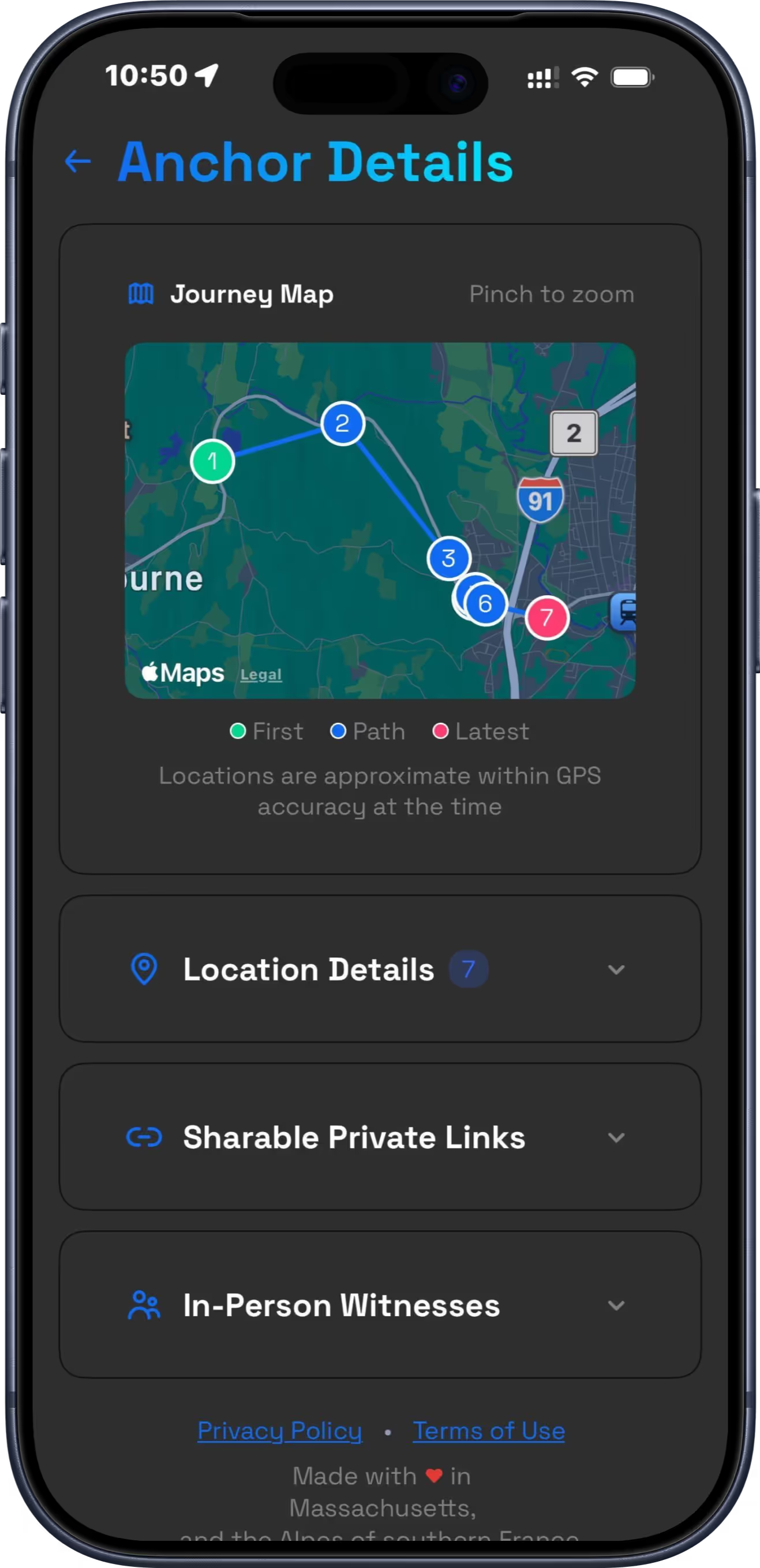
For public figures like Mayor Mamdani facing false location-based accusations, Location Ledger provides continuous GPS verification. Every 15 minutes, your coordinates are automatically recorded and encrypted on your device, then anchored daily to World Chain's blockchain. This creates court-admissible proof of where you actually were, making it impossible for synthetic media to place you somewhere you never visited.
The death of visual truth demands a new approach to evidence. We can't stop people from creating fake content, but we can ensure that real events leave permanent, unalterable records that synthetic media cannot undermine.